
22 October 2026
Roofers In Dorchester, Chickerell And Preston
Roofers in Dorchester, Chickerell and Preston: what each area's roofs need, Poundbury's design code, Dorset Council rules and typical roof prices.
In Poundbury, concrete roof tiles are banned outright by the estate’s own building code. Ten minutes down the road in Chickerell, they’re on most of the houses built in the last thirty years. Then you’ve got Preston, where the roofs on the bay slope take salt and easterly gales that Dorchester never sees. So if you’re looking for roofers in Dorchester, Chickerell or Preston, it helps to know that one roof can need very different work from the next, depending on postcode. Dorchester’s conservation area dates back to 1970 and was extended in stages up to 2003. Chickerell’s was designated in 1990 and extended in 2008. Preston has no conservation area of its own. This guide goes through each place in turn: what’s on the roofs, who you might need to ask before work starts, and what the usual jobs cost.
Roofers in Dorchester, Chickerell and Preston: why the postcode matters
We’re based on Portland Road in Wyke Regis, so all three are an easy drive. The van carries the same kit wherever it’s going. What changes is the paperwork, the materials and the fixings.
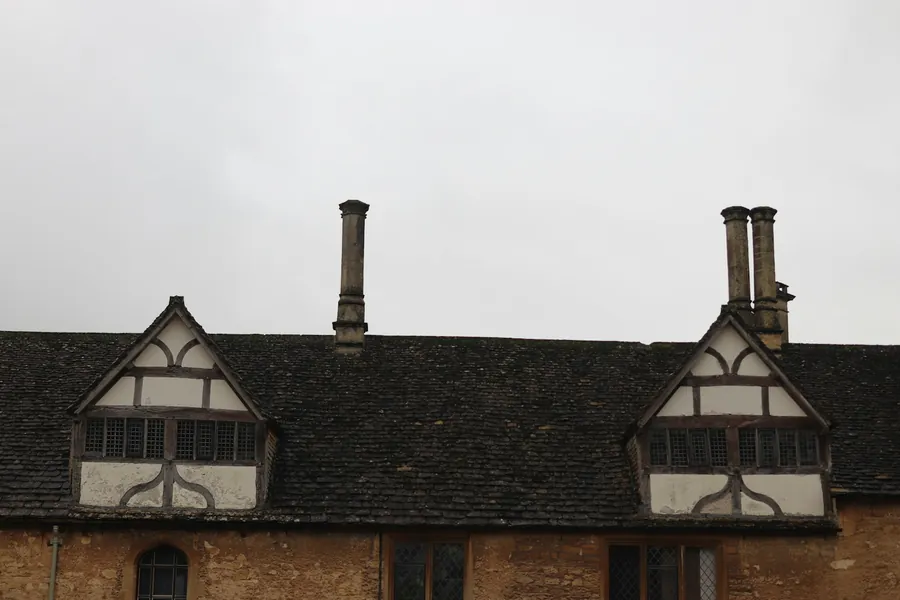
Before we price anything round here, we want to know what the roof was built with, since that tells us what the timbers can carry and which materials will match. Then there’s the question of who gets a say. It might be Dorset Council, a Poundbury management company, the Duchy of Cornwall or nobody at all. And exposure counts for more than people think: salt and wind on the bay, frost and damp a few miles inland.
Our roof repairs start with a look at the whole roof, not only the spot that’s leaking, and that matters more in an area as mixed as this one. A slipped slate on a Dorchester town house and a lifted verge on a Chickerell semi look alike from the pavement. Up close they’re very different repairs.
Dorchester’s old centre, rebuilt a piece at a time
Dorchester town centre wasn’t rebuilt in one go. Fires in the 17th century, then again in the south of the town in 1725 and the east in 1775, left only a few houses older than about 1700, according to the Royal Commission’s survey of Dorset. What replaced them went up bit by bit, so you get Georgian fronts, Victorian stucco and older stone backs on the same street.
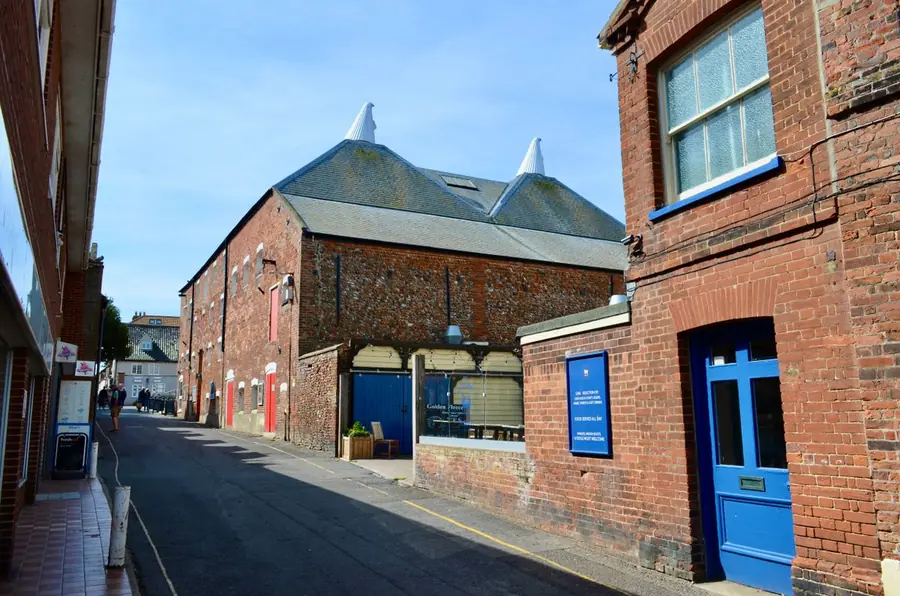
The roofs are just as mixed. Slate, clay tile, stone slate and lead all turn up within a few doors of each other, and often on the same building, where a front slope was redone in slate and the back was left in older tile. When we look at one of these roofs, the first job is working out which covering belongs where before anything gets matched.
Most of that centre is inside the conservation area. Like-for-like repairs normally don’t need planning permission, but changing materials on a slope the street can see is a different story, and listed buildings need listed building consent for most changes. Scaffold on a town-centre pavement also needs a licence from Dorset Council as the highway authority, and that’s a lead time to build in.
The Victorian streets further out are mostly slate. Expect nail fatigue, slipped slates and tired valleys rather than anything exotic, and see our Dorchester roofing page for more on the town’s estates and Fordington.
Poundbury: the code that comes before the council
Poundbury is the one place in this guide where a private rulebook sits on top of the planning system. The 2019 Poundbury Design and Community Code says work that wouldn’t need planning permission, retiling included, still needs prior consent from the Regulator. That’s the management company for most matters and the Duchy of Cornwall for alterations.
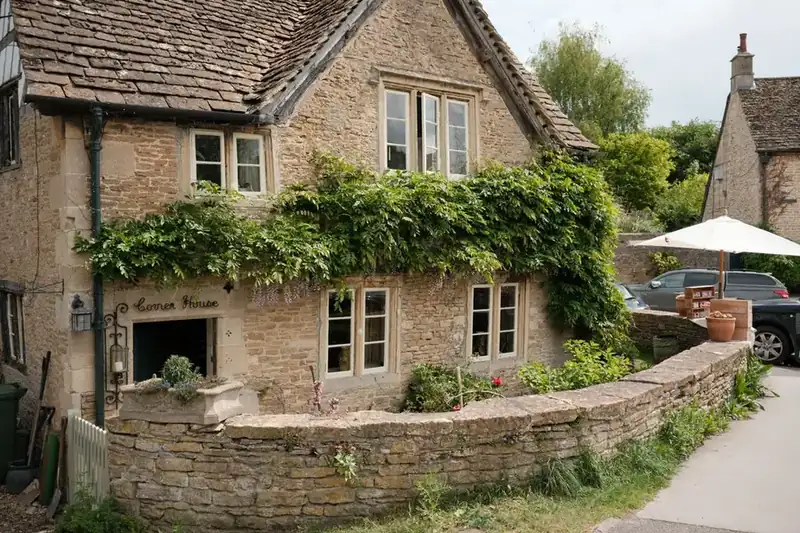
The roof section of the code is strict. Coverings have to be natural slate, split stone, plain clay tiles, pantiles or Roman tiles. Concrete plain and interlocking tiles aren’t allowed, and nor are ridge vents or tile vents. Plastic and uPVC aren’t acceptable for any roof component you can see, so gutters go on brackets or a painted timber fascia. Pitches generally run from 30 degrees up to 60 or 65.
The detail goes further than most homeowners expect. Rooflights have to be the small conservation type, kept off front and prominent slopes. Lead flashings must be proper lead, not a modern lead substitute. Solar panels are considered only where you can’t see them from the street. The code even suggests a couple of courses of heavy split stone at the eaves, which is how roofs in the district were often finished against high winds.
So on a Poundbury roof, the cheapest fix is often the one that gets refused. We price these jobs in the materials the code allows, and we’d rather tell you that up front than redo a ridge in something the Regulator turns down.
Chickerell: newer estates and an old village core
Chickerell has grown fast. A lot of its homes went up from the 1990s onward, and those roofs are mostly concrete interlocking tile with factory-made ridge and verge systems. They’re not old roofs. They still fail, usually at the edges.
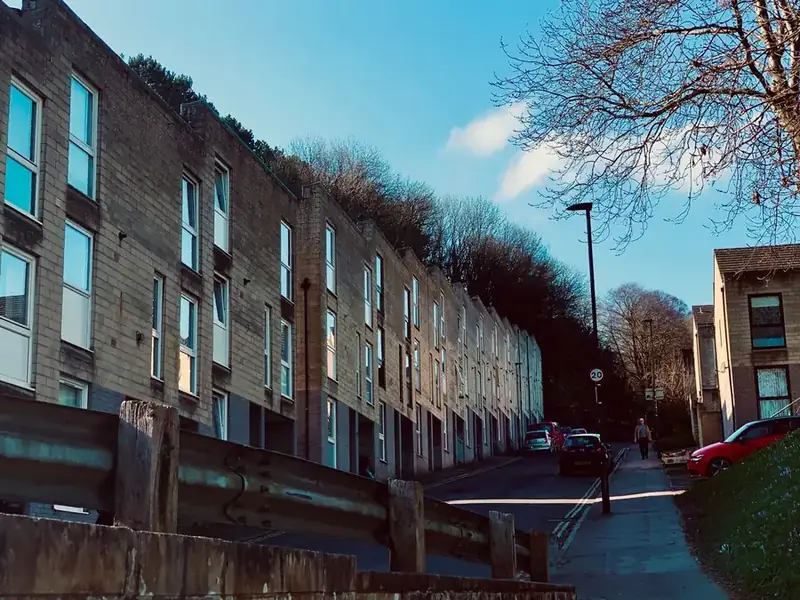
The faults we expect to find are loose dry verge caps after a blow, ridge units working free, and the odd tile cracked by someone walking on it to fit an aerial or a satellite dish. None of these are big jobs, but leave a loose verge too long and the wind gets under the end tiles. Since BS 5534 was revised in 2014, every tile on a new roof has to be mechanically fixed. On older estate roofs that predate it, a repair is a good time to add clips.
The old village core is different. It’s been a conservation area since 1990 and the boundary was extended in 2008, so the same caution about materials applies here as in Dorchester. Chickerell also faces the Fleet and Chesil Beach to the south-west, which gives its roofs more wind than you’d guess from looking at a map of Weymouth. We cover the town’s estates and its older corners on our roofing page for Chickerell.
Preston and Overcombe: bungalows on the bay slope
Old photos of Overcombe Corner show open hills above the bay, and Weymouth Museum notes they were built over heavily in the 1950s. That’s the housing you’ll find there now: postwar houses, bungalows and chalet bungalows up the slope from the beach, with a few older cottages along Preston Road, some of them listed.
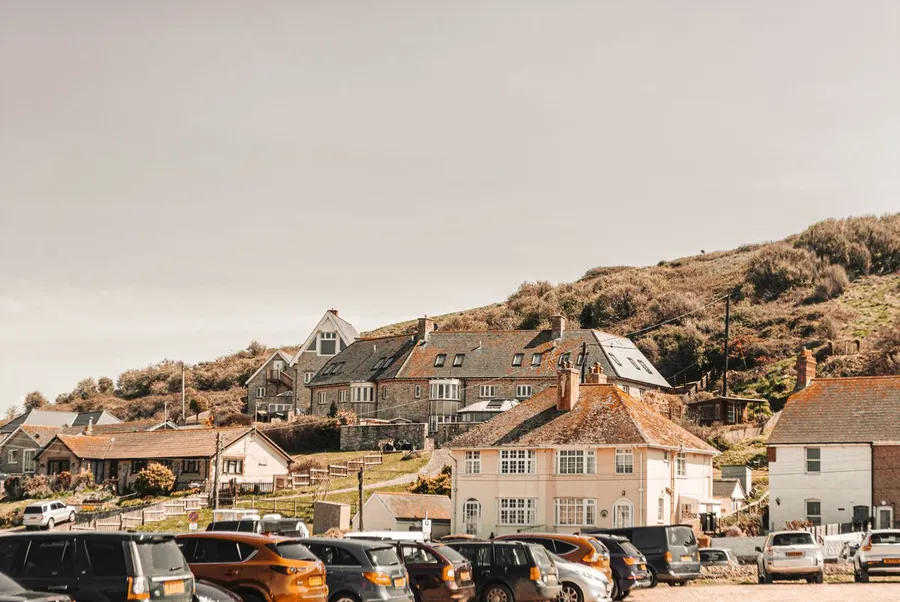
Bungalow roofs bring their own jobs. A lot of them have a low pitch, which leaves less room for error at the laps, and plenty have had dormers added over the years. Where dormers were added cheaply, the flat roof on top and the flashings where it meets the main slope are the usual weak points. If you’re thinking of adding a dormer rather than fixing one, the Planning Portal’s guide to loft conversion planning rules explains when permitted development covers it.
Preston itself isn’t a conservation area. Sutton Poyntz, just up the valley, has been one since 1972, so check which side of the line you’re on before you change materials there. For most Preston and Overcombe homes, a like-for-like re-roof goes ahead without planning permission.
Inland or on the bay: how the weather changes the job
Dorchester is about seven miles north of Weymouth, with the Ridgeway between it and the sea. That makes for colder, stiller nights, more frost and slower drying, so moss and lichen do well on north-facing slopes, and porous old tiles and stone slates take a beating in freeze-thaw winters. Salt is rarely a factor up there.
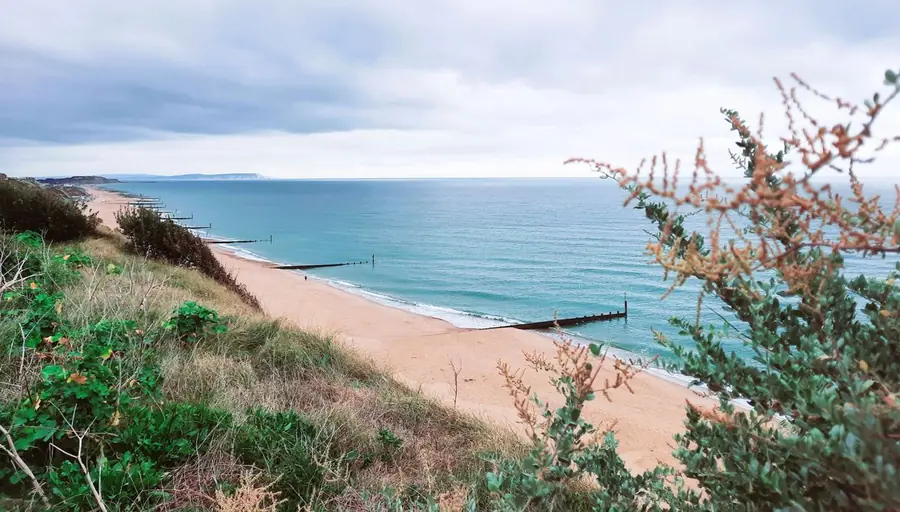
Weymouth Bay is the other way round. Portland shelters it from the worst of the south-westerlies, but it’s open to the east, and an easterly gale drives salt spray straight up the Preston slope. Salt does little to a good slate or tile. It goes for the metal: nails, clips, flashings and gutter brackets. That’s why on a bay-side roof we fix with stainless steel or copper, and why a twenty-year-old repair done in plain galvanised nails is often what’s failing.
Chickerell sits between the two, with less salt than Preston but more wind than Dorchester. If you’re weighing up materials for a re-roof anywhere in the area, our post on whether to choose slate or tile for a re-roof goes into how each covering copes with salt, weight and conservation rules.
What roofers in Dorchester, Chickerell and Preston charge for typical jobs
We charge the same rates in Dorchester, Chickerell and Preston. What changes is the job itself, and sometimes the material it has to be done in. These are the bands from our own price list. Your quote will be a fixed figure inside or near them.
| Job | Where it tends to come up | Typical price |
|---|---|---|
| Replace a few slipped slates or tiles | Victorian slate in Dorchester, older bungalows in Preston | £150 - £400 |
| Re-bed or dry-fix a ridge | Chickerell estates, postwar Preston | £400 - £1,000 |
| Repair or reline a valley | Dorchester’s older town houses | £500 - £1,400 |
| Renew lead flashing round a chimney | Anywhere, but bay-side metal goes first | £400 - £1,200 |
| Bay window or porch roof | Preston and Overcombe bungalows | £400 - £1,200 |
| Fascias, soffits and guttering (semi) | Chickerell and Preston | £2,500 - £4,500 |
| Re-roof a three-bed semi, concrete or clay tile | Chickerell, Preston | £9,000 - £14,000 |
| Re-roof a three-bed semi, natural slate | Dorchester, Poundbury | £11,000 - £17,000 |
Natural materials cost more to buy and take longer to lay, so a Poundbury or Dorchester conservation-area roof will usually sit near the top of its band. Scaffold licences and access in the town centre can add a bit too. A straightforward estate roof in Chickerell tends to come in lower.
Before you rely on any price, check whether the house sits in a conservation area. The government’s planning data map of conservation areas shows the boundaries for Dorchester, Chickerell and Sutton Poyntz. In Poundbury, ask the Regulator before you ask us to order anything.
If you’d like a fixed price for your roof, book a free survey in Dorchester, Chickerell or Preston and we’ll come and take a look.
Frequently asked questions
Do I need permission to re-roof my house in Poundbury?
Usually not from Dorset Council if you're replacing like for like, but Poundbury has its own layer of control. The Design and Community Code says alterations need prior consent from the Regulator, which means the Poundbury management company or, for alteration requests, the Duchy of Cornwall. That applies even where planning permission isn't needed. Concrete tiles, ridge and tile vents, and plastic gutters on show are all ruled out, so get consent before anything is ordered.
Is Preston in Weymouth a conservation area?
Not according to the government's planning data, which lists no conservation area for Preston itself. Sutton Poyntz, just up the valley, has been one since 1972, and a few older cottages along Preston Road are listed buildings. Most bungalows and postwar houses in Preston and Overcombe can be re-roofed like for like without planning permission, though a new dormer or a change of roof shape may need it.
Is a roof in Dorchester treated differently from one on the coast?
Yes. Dorchester sits inland, so there's far less salt in the air, but it gets colder nights, and its old centre is full of mixed slate, clay tile, stone slate and lead roofs inside a conservation area. On the Weymouth Bay side, salt and easterly gales attack nails, clips and metalwork first. We change the fixings and the details we specify to suit where the house is.
How much does a roof repair cost in Chickerell or Dorchester?
Our prices are the same across the area. Replacing a few slipped slates or tiles usually costs £150 to £400, re-bedding or dry-fixing a ridge £400 to £1,000, and relining a valley £500 to £1,400. A full re-roof on a three-bed semi runs from £9,000 to £14,000 in concrete or clay tile and £11,000 to £17,000 in natural slate. You get a fixed written price after a free survey.
Want a roofer to take a look?
Free surveys and fixed written quotes across Weymouth, Portland and nearby towns.