
14 October 2026
Chimney Repairs In Weymouth And Portland: Salt, Stone And Your Stack
Chimney repairs in Weymouth and Portland explained: salt damage, Portland stone and brick stacks, flaunching, lead, rough costs and when Dorset Council needs asking.
Why chimney repairs in Weymouth start with salt
Ask a Weymouth roofer which part of a house ages fastest and plenty will point at the chimney. Chimney repairs make up a big share of the small jobs on this coast, and the reason is simple: the stack is the highest, most exposed bit of masonry you own, and here it sits in air that carries salt for most of the year. From Wyke Regis and Rodwell to Fortuneswell, Easton and Weston, nothing stands between a chimney and the Channel. Two things follow. Rain arrives sideways in a south-westerly, so it soaks straight into joints that a sheltered inland stack would barely get wet. And every time that soaked masonry dries, the sea salt in it crystallises in the pores and pushes outwards.
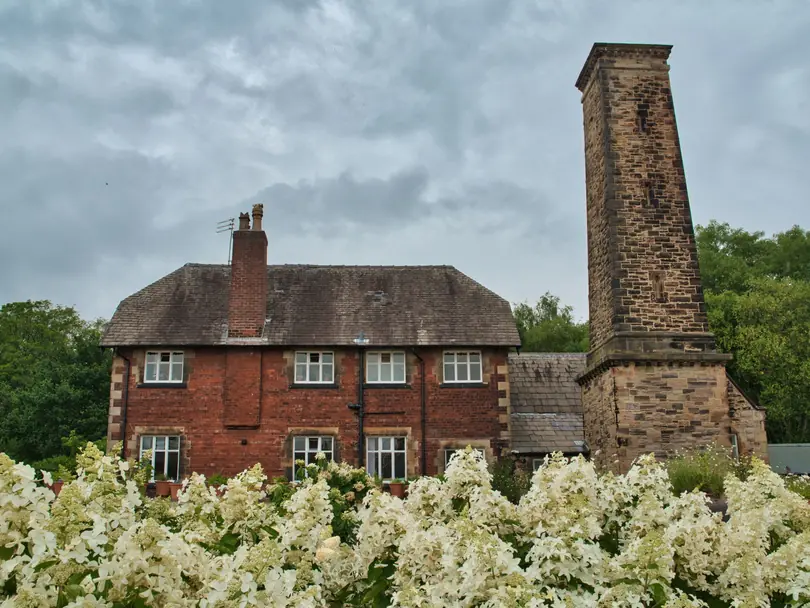
Salt crystallisation is slow and it works in a set order. The mortar joints go first, turning sandy and receding. Then the faces of bricks or stones begin to flake, usually on the side facing the sea. Render cracks, water gets behind it, and pieces drop into the gutter. None of it happens overnight, but a stack that was sound when a house was bought can need work ten or fifteen years later. Our chimney repairs service covers all of it, from a single loose pot to a full rebuild.
It’s worth looking at your chimney from the street once a year, ideally after the winter, with a pair of binoculars. You’re looking for anything that has changed since last time.
Portland stone stacks and brick stacks don’t fail the same way
The island built with what it quarried. Plenty of older homes on Portland, and a fair number in Weymouth, have stacks of Portland stone, a pale oolitic limestone. Many others, especially in the Victorian streets of Weymouth and Westham, are brick, sometimes rendered over.
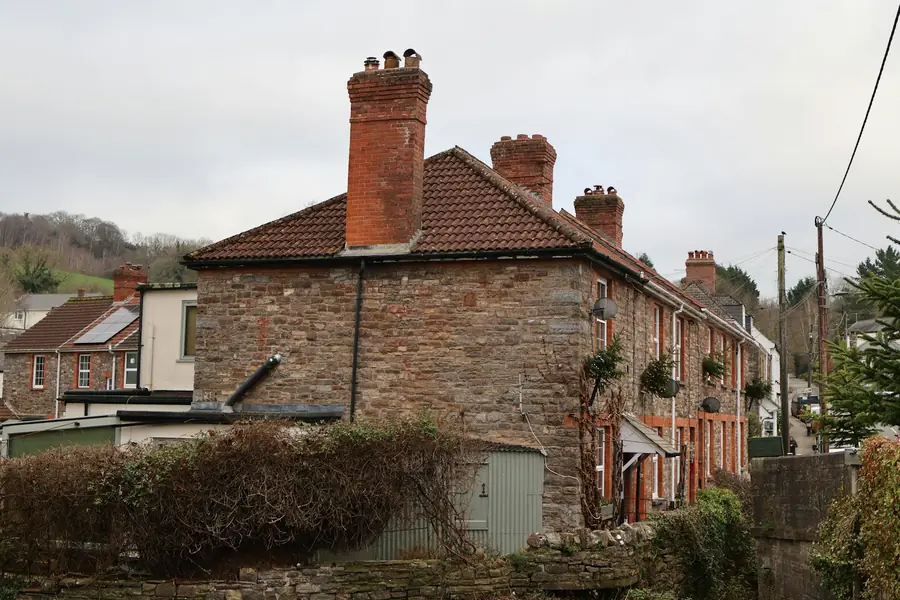
Portland stone is durable in bulk but relatively soft at the surface, and it doesn’t forgive the wrong mortar. When an older stack has been repointed in hard cement, the stone becomes the weakest part of the wall. Moisture and salt can no longer escape through the joints, so they come out through the stone face, which then spalls. You’ll often see a Portland stack where the mortar looks fine and the stones around it are crumbling. That is almost always the cement’s doing. Historic England’s guide to repointing brick and stone walls explains why lime mortar is the right choice for older masonry, and it applies to chimneys more than anywhere.
Brick stacks tend to fail at the joints first and then at the bricks’ faces, particularly with softer Victorian bricks. Rendered stacks hide the problem. A render can look intact from below while water sits behind it, and by the time it falls away, the brick underneath may be saturated.
The top of the stack: pots, cowls and flaunching
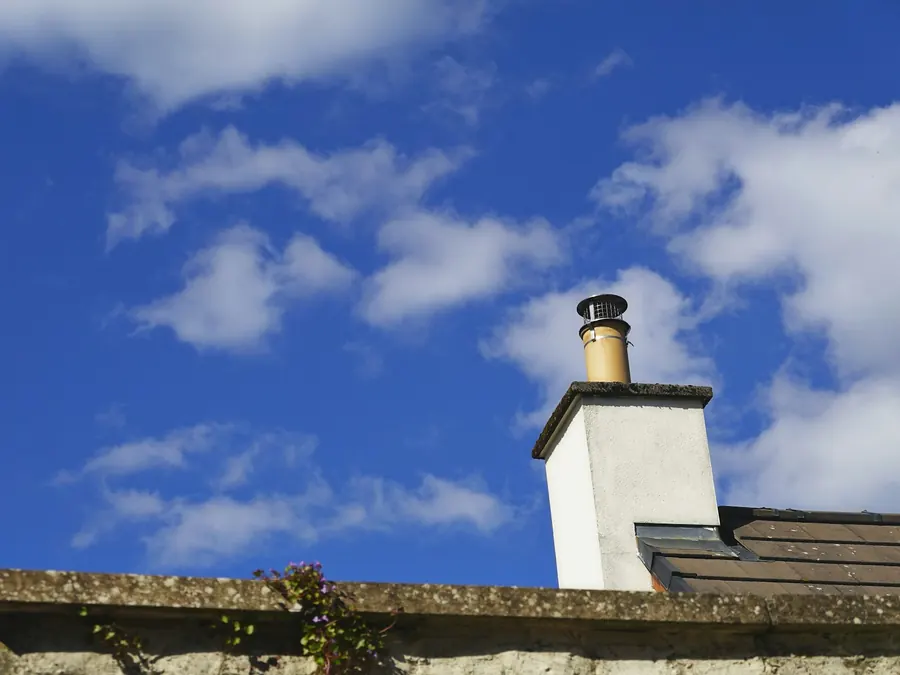
Most chimney leaks we trace start at the very top, not the bottom. The pots sit in a sloped bed of mortar called the flaunching, which throws rainwater off the top of the stack. When it cracks, water runs straight down inside the brickwork.

Flaunching takes a battering. It’s exposed on every side, it gets baked in summer and frozen on the odd cold night, and on this coast it’s salted all year. Cracked flaunching also loosens the pots. A loose pot on a windy day is a real hazard, because a falling clay pot can go through a roof or land on a pavement.
Cowls and caps
Open pots on unused flues let rain straight down the chimney. A cowl or a ventilated cap stops most of that while still letting air through. On Portland, where gulls are everywhere, a mesh guard also stops birds nesting in the flue.
What a re-flaunch involves
The old mortar is broken out, the pots are lifted, checked and reset, and a new sloped bed is formed. If the pots are cracked, they get replaced. It’s one of the cheaper chimney jobs. It also prevents a lot of the expensive ones.
Where the stack meets the roof: lead flashing
Every chimney punches a hole through the roof, and the lead around its base is what keeps that hole dry. There are usually four parts: a front apron, stepped flashings down each side, and a back gutter behind the stack on the high side.
Lead itself lasts a long time. What fails is how it’s held. Flashings should be tucked into a mortar joint, wedged and pointed. Too often we find lead that was simply stuck to the face of the stack with mastic, or held by pointing that has since washed out, and wind has lifted it. The back gutter is the other weak spot, because it collects all the water coming down the slope above the stack, plus leaves and moss.
If you’re seeing a damp patch on a bedroom ceiling next to the chimney breast, or on the breast itself, failed flashing or flaunching is the likely culprit. Sometimes the flashing just needs re-dressing and re-pointing. Sometimes it’s time for new lead, which on a slate roof means lifting the slates around the stack and putting them back properly.
Repoint, rebuild, cap or take it down
Once the stack has been looked at closely from a scaffold, you’ll usually be choosing from four routes. The right one depends on the stack’s state and whether you still use the fireplace.
Repointing
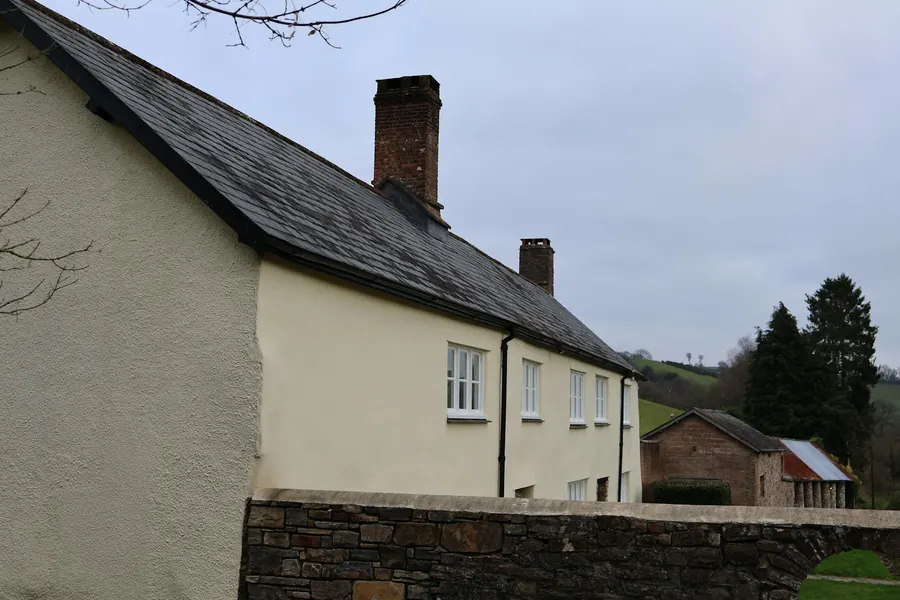
If the stack is upright and the bricks or stones are mostly sound, raking out the joints and repointing is enough. On older and stone stacks we use lime. A few badly spalled bricks or stones can be cut out and replaced at the same time.
Rebuilding
A stack that leans, has bulged or has lost the faces of many bricks needs taking down to sound masonry and rebuilding. We reuse the original bricks or stone where we can, which keeps the chimney looking right on the street.
Capping
If the fireplace is long gone, a stack can be capped to keep rain out. It must stay ventilated. Seal a flue completely and condensation builds up inside, which shows up later as damp on the breast. A vented cap at the top and a vent at the bottom keep air moving.
Removing
Taking a redundant stack down below the roofline and slating over the gap removes the maintenance for good. On a terrace with a shared stack, the government’s Party Wall Act guidance explains when neighbours need notice. Removing a chimney breast inside the house is a separate, structural job that needs Building Regulations approval.
Rough chimney repair costs in Weymouth and Portland
These are guide figures for a typical two-storey house. Access moves the price more than anything else, so read them as a starting point, not a quote.
- Re-flaunching and resetting pots: around £250 to £600
- Fitting a cowl or vented cap: around £150 to £350 per pot, plus access
- Repointing a single stack: around £400 to £900
- New lead flashings around a stack: around £400 to £1,000
- Rebuilding a stack above the roof: around £1,500 to £3,500
- Removing a stack and making good the roof: around £1,000 to £2,500
Scaffold usually sits on top of these and is often the biggest single cost. A stack on a three-storey Georgian terrace near the harbour needs far more scaffold than one on a 1930s semi in Preston, and if the scaffold stands on a pavement, it needs a licence from Dorset Council. Where several chimney jobs are due, doing them all from one scaffold saves money. For wider roof prices, see our roof repair cost guide.
When Dorset Council needs to be asked first
Repairing a chimney like for like almost never needs permission. Repointing, re-flaunching, new lead and replacing pots in matching materials are maintenance. The questions start when the stack’s appearance changes, or when it comes down.
Dorset Council lists fifteen conservation areas across Weymouth and Portland. They include the Town Centre area around Melcombe Regis, the Esplanade and the old harbour, and on Portland the old cores of Easton, Wakeham, Reforne, Weston, the Grove and Underhill. Chimneys are a big part of how these streets look, so removing a stack that can be seen from the road, or changing its materials, is exactly what planners in a conservation area pay attention to. You can check whether your house is in one on Dorset Council’s Weymouth and Portland conservation areas page.
Listed buildings are stricter. Many of the Esplanade terraces are listed, and altering or removing a chimney on a listed building needs listed building consent, even where the work seems minor. Our post on planning permission for roof work in Weymouth and Portland goes through the wider rules in more detail.
If you’re not sure, ask before the scaffold goes up. A short email to the planning team costs nothing, and we’re happy to help you work out what to ask.
Frequently asked questions
How can I tell if my chimney needs repairing?
From the ground, look for mortar missing between bricks or stones, render that is cracked or has fallen away, pots that lean, a stack that no longer looks upright, and lead around the base that has lifted. Indoors, damp patches on the chimney breast or ceiling near the stack are a common sign. Binoculars help. Don't go up a ladder to check.
Should a Portland stone chimney be repointed with cement?
No. Portland stone is a fairly soft limestone, and a hard cement mortar forces moisture and salts to leave through the stone instead of the joints, so the stone face decays first. Lime mortar, as Historic England's repointing guidance recommends for older masonry, lets the joints take the wear and can be renewed later.
Do I need permission to remove a chimney in Weymouth or Portland?
On an ordinary house outside a conservation area, taking down a stack is not usually a planning matter, although taking out a chimney breast inside needs Building Regulations approval and a shared stack may need a party wall notice. If the house is listed you need listed building consent, and in one of Weymouth's or Portland's conservation areas you should check with Dorset Council before removing a stack that can be seen from the street.
How much does chimney repair cost in Weymouth?
As a rough guide, re-flaunching and resetting pots runs from about £250 to £600, repointing a single stack from about £400 to £900, new lead flashings from about £400 to £1,000, and a rebuild above the roof from about £1,500 to £3,500. Scaffold is usually extra and often the biggest single cost on a tall or terraced stack.
Want a roofer to take a look?
Free surveys and fixed written quotes across Weymouth, Portland and nearby towns.