
28 October 2026
Lead Flashing Repairs In Weymouth And Portland: Re-Dress, Re-Point Or Renew?
Lead flashing repairs in Weymouth and Portland: where the lead sits, why it splits or lifts on this coast, codes, lead-free options, Dorset Council rules and costs.
Most leaks we trace on older Weymouth and Portland houses don’t start in the middle of a slope. They start at a junction, wherever the slates or tiles meet a chimney, a wall, a dormer or a second roof, and the thing guarding that junction is usually a strip of lead. Lead flashing repairs are therefore some of the commonest small jobs we do here. The material itself is tough: code 4 lead, the everyday flashing grade, is about 1.8mm thick, and properly fitted it can see out a roof. The trouble on this coast is everything around it. Chesil Beach runs for about 18 miles with nothing behind it to slow a south-westerly, Portland sits right out in the Channel, and salt reaches every nail and clip. So this post is less about lead and more about the job of keeping it in place.
Lead flashing repairs in Weymouth come in three sizes
Before getting into causes, it helps to know what a roofer can actually offer you, because “fix the flashing” can mean very different jobs.
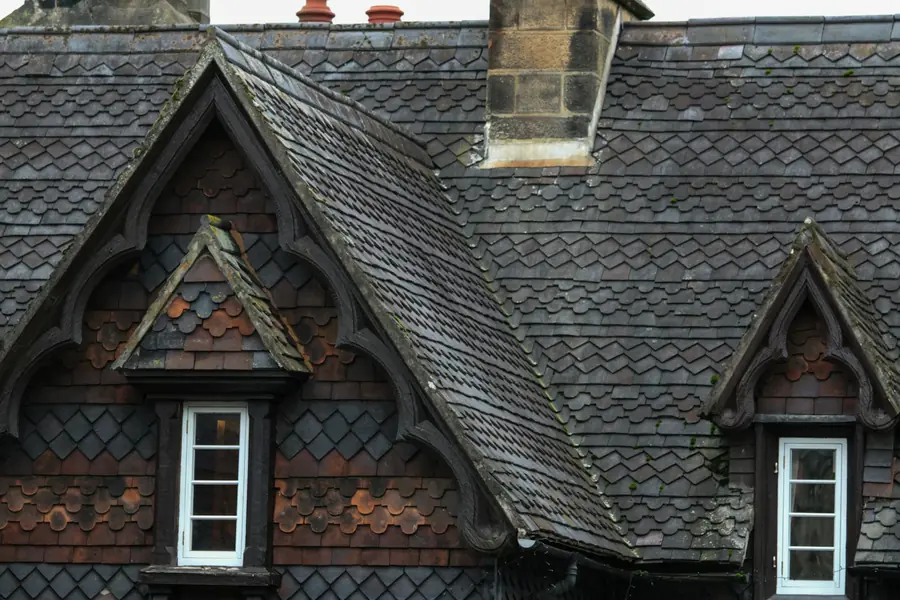
The smallest is a re-dress and re-point. The lead is sound, but it has worked loose from the mortar joint it was tucked into, or been lifted by wind. It gets pressed back to the shape of the roof, wedged into the joint again and pointed. An hour or two of work, if the access is easy.
The middle option is renewing one piece. A single split cover flashing, or one cracked soaker beside a dormer, gets cut out and replaced, lapped into the old lead either side. The last is renewing the whole detail: every piece around a chimney, the full length of a valley, or the lead over a bow window. That one usually means lifting slates or tiles to get at it.
A good quote tells you which of the three it is and why. Our roof repairs service starts with that diagnosis, because re-pointing lead that is already split only buys you a few months.
Where the lead is on a Weymouth or Portland house
Walk down almost any older street in Weymouth and you’ll pass dozens of lead details without noticing them. These are the ones that leak.
Chimney flashings and back gutters
A stack has lead on all four sides: an apron at the front, stepped flashings down each side and a back gutter on the uphill face. The back gutter takes everything running down the slope above the stack, so it’s the piece we replace most. We’ve written separately about chimney repairs in Weymouth and Portland, covering flaunching, pots and repointing, so here the stack only matters as one more junction.
Abutments against walls
A Victorian terrace in Westham or the Park District usually has a two-storey back addition, and its roof meets the main wall of the house. Lean-to kitchens and porches do the same thing lower down. Each of those joins is sealed by soakers under the slates and a stepped or straight cover flashing chased into the wall above.
Valleys
Where two slopes meet at an inside corner, a valley carries the water from both. On older slate roofs that channel is often lead laid on boards, and it’s usually somewhere awkward, above a landing or a stairwell.
Bay roofs and dormer cheeks
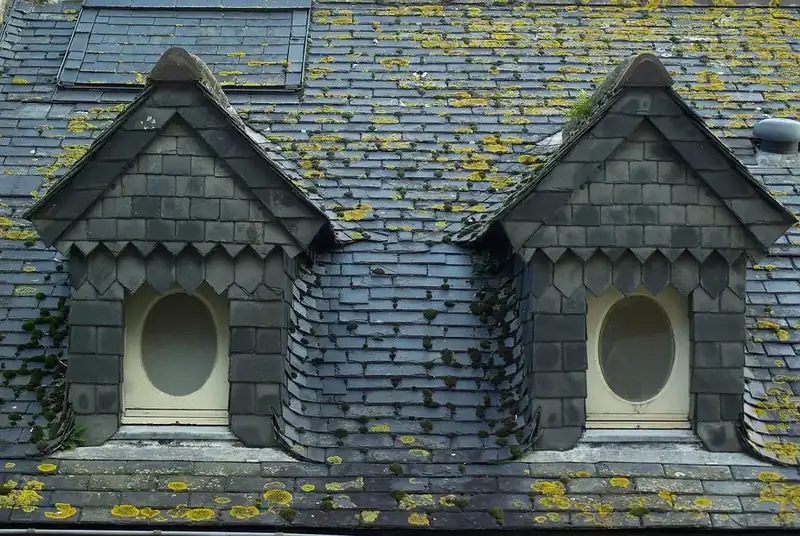
The Esplanade is lined with bow windows, and the small curved roofs over them are often lead. Victorian bays further back from the seafront have the same kind of roof, and dormers on attic conversions have lead on the cheeks (the triangular sides) and along the junctions with the main slope.
Why lead flashing fails on a seaside roof
Lead doesn’t rot, and a flashing that has failed after twenty years has usually been failing quietly since the day it went on. Most of what we find comes down to how it was fitted.
Too long, then split
Lead moves with temperature, roughly two and a half times as much as steel for the same change, and a south-facing flashing on a sunny afternoon gets far hotter than the air around it. Cut a piece too long, or nail it so it can’t slide, and it creeps and buckles a little every day. Eventually it cracks, usually a fine line across the lead near a fixing or a fold. Thin lead gets there sooner. You won’t spot it from the garden, but in driving rain it lets in more water than you’d think.
Wind getting under the edge
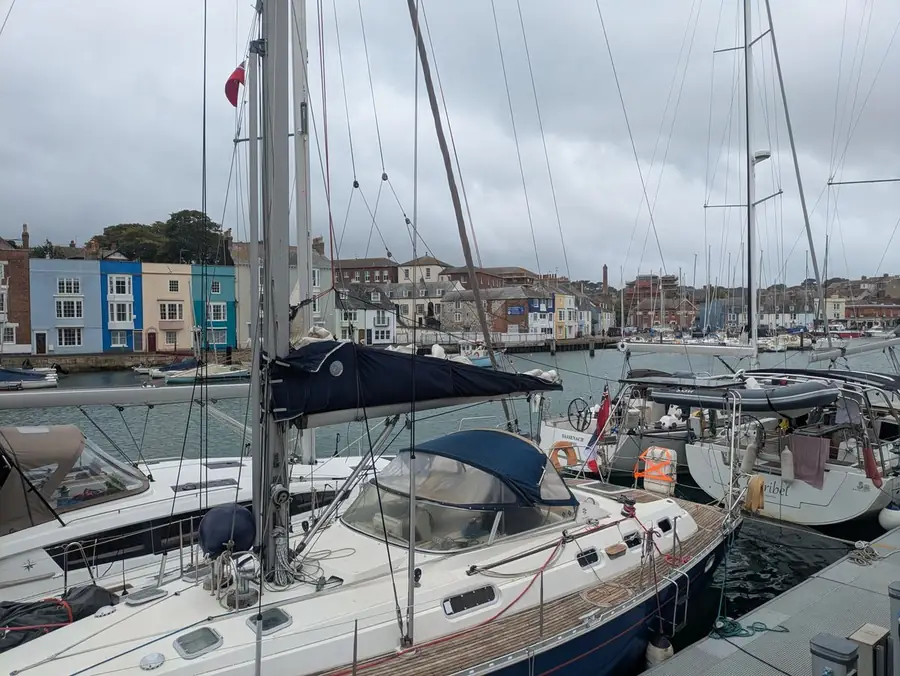
Free edges are meant to be held down with clips. Where clips were left out, or have corroded away, a gale off the bay gets under the lead and folds it back like a page. Once it’s lifted, rain blows straight in behind it.
Salt eating the fixings
The lead copes with sea air. Mild steel nails and clips don’t. On Portland especially, we find flashings held by fixings that have rusted to nothing while the lead is still fine. Copper and stainless steel are the right fixings on this coast.
Pointing washed out of the chase
Wall flashings sit in a groove (the chase) cut into a mortar joint, held by lead wedges and sealed with pointing. Hard cement pointing shrinks, cracks and drops out, and the flashing then hangs loose in an empty slot.
Theft
Lead is worth money as scrap, and low, hidden roofs are the easy targets: rear extensions, garages, porches, empty holiday lets. Since the Scrap Metal Dealers Act 2013, dealers need a council licence and can’t pay cash, which has made stolen lead harder to sell. It hasn’t stopped it.
Codes and lengths: what a proper quote should say
Lead sheet is sold in codes. The number started life as the weight in pounds per square foot, so the higher the code, the thicker the lead. The really heavy codes mostly end up on churches and big public buildings, in parapet gutters and whole lead roofs. A house needs the lighter end of the range.
The trade’s reference book is the Lead Sheet Training Academy’s Rolled Lead Sheet manual, which sets out the code, the maximum piece size and the fixing method for each detail. In practice that tends to mean code 4 (about 1.8mm) for step flashings, cover flashings and aprons, code 5 (about 2.24mm) for back gutters and valleys, and code 3 only for soakers hidden under slates.
Length is the other half. Flashings are cut into short pieces, commonly no more than about a metre and a half each, and lapped where they join so water runs over the joint, never into it. On an exposed roof the clips go closer together.
So when you get a quote for lead work, look for three things in writing: the code for each part, how the pieces will be fixed, and whether any slates or tiles have to come up. A quote that says “replace flashing” and nothing else leaves all three to chance.
Portland stone, Portland weather
The island changes the job in two ways: the stone the houses are built from, and the weather they’re built in.
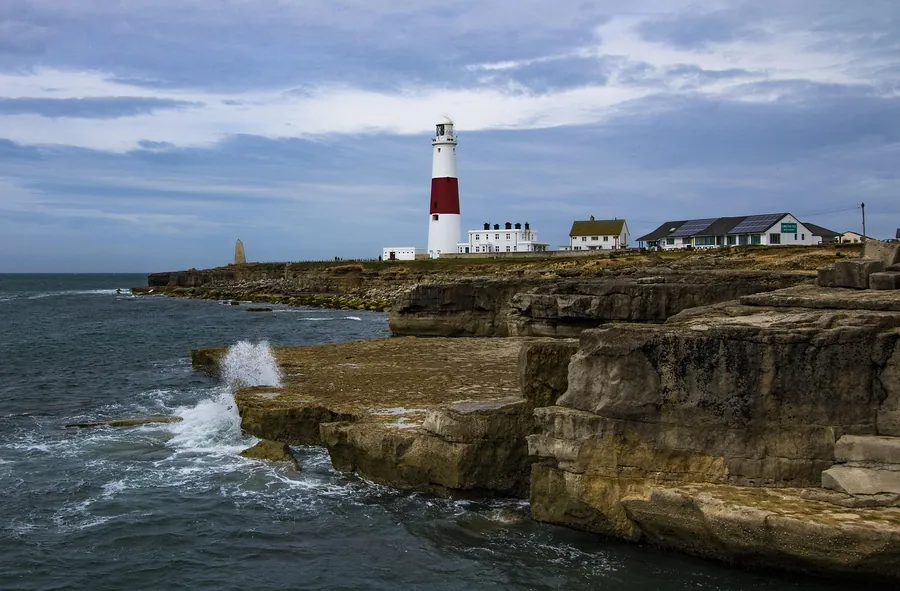
Up on Tophill, around Easton, Weston and Southwell, a roof takes the wind straight off the sea from almost every direction. Lead details there need more fixings than the same detail in a sheltered street in Upwey, and we’d lean towards the heavier code on anything wide or catching the weather. Down in Fortuneswell and Chiswell the houses are more tucked in, but the old stone cottages often have tall stacks and awkward abutments against neighbouring walls.
Then there is the stone. Many older Portland homes, and plenty in Weymouth, have walls and stacks of Portland stone, a pale limestone that is fairly soft on its surface. Cutting a chase for a new flashing in soft stone needs care, ideally along an existing joint rather than across a block, and the chase should be pointed in a lime mortar that won’t force damp out through the stone around it. We go into why lime matters on these stacks in the chimney post linked above.
Lead, GRP or a lead substitute: which fits where
Lead isn’t the only way to weather a junction, and on some roofs it isn’t the best.
GRP
Glass-reinforced plastic comes as moulded valley troughs and as a liquid-and-mat system for small flat areas. On a more modern house with a concrete-tiled roof, a pre-formed GRP valley is a sensible, cheaper replacement for a worn-out mortar or felt one. It can’t be shaped around a curved bay or a complicated stack the way lead can.
Lead substitutes
These are flexible sheets, often a polymer or rubber-based material with a reinforcing mesh, that look like lead from a distance and have no scrap value. They suit straightforward abutments on rear extensions, garages and holiday lets where theft is the worry and nobody is looking closely.
When lead is still the answer
On a period front, a listed building, a bow window or anything that has to be shaped in three dimensions, lead is the right material and usually the expected one. It also outlasts the alternatives by decades when it’s fitted to the rules.
Conservation areas, listed buildings and Dorset Council
Since April 2019, Weymouth and Portland have come under one planning authority, Dorset Council. For lead work, what the council cares about is whether the finished roof looks different.
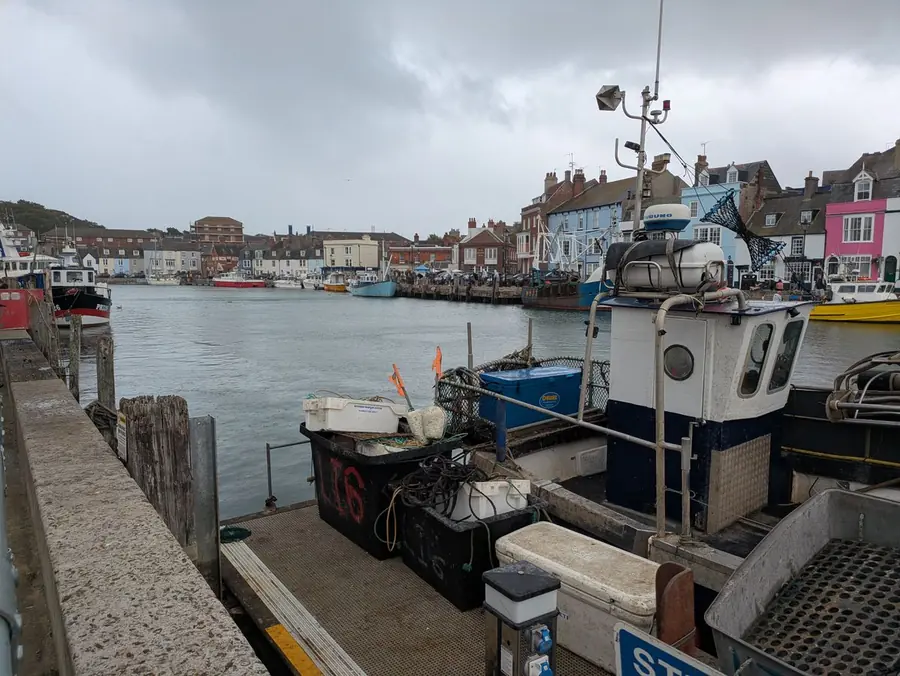
Repairing or renewing lead with new lead is maintenance, and it doesn’t need planning permission. Between the town and the island there are 15 conservation areas, Wyke Regis and most of the town centre among them, along with the old village cores on Portland. You can check whether your street is in one on Dorset Council’s conservation areas page for Weymouth and Portland. In one of those, a change of material that people can see from the street, such as lead swapped for a substitute on a front bay, is worth raising with the planning team before the work starts.
Listed buildings are stricter. A long run of the Esplanade’s Georgian terraces is listed, and changing lead to another material on one of them can count as an alteration that needs listed building consent. Like-for-like leadwork in the right code is the safe route.
Lead flashing repair costs in Weymouth and Portland
These match the figures in our wider guide to roof repair costs in Weymouth and Portland. They’re for typical houses, and reaching the work moves the price more than the lead does.
- Re-wedging and repointing a lifted flashing: from around £250
- New lead flashing around a chimney: £400 to £1,200
- Repairing or re-lining a valley: £500 to £1,400
- Bigger lead jobs, such as re-covering a bow window roof high on a terrace: up to around £2,500
Scaffold sits on top when ladders and roof ladders won’t do, and on a three-storey seafront house it can be the largest line on the quote. If the scaffold is going up anyway, it’s worth having every flashing on that elevation checked while it’s there.
If you’ve got a damp patch next to a stack, a stain on a landing ceiling or a flashing you can see flapping from the garden, get in touch and we’ll come and look.
Frequently asked questions
Can a split in lead flashing just be patched?
Only for a while. Mastic, flashing tape or a smear of bitumen over a split will usually hold for a season or two before the lead moves again and opens the crack. A lasting repair means cutting out the failed piece and fitting a new one at a sensible length, or, on some details, a skilled leadworker welding in a new section.
What thickness of lead should go on an exposed Portland roof?
Code 4 lead, about 1.8mm thick, is the usual choice for step and cover flashings, with code 5 common for back gutters and valleys. On a very exposed roof the bigger change is often in the fixings: more clips, set closer together, in copper or stainless steel so the salt air doesn't eat them.
Can I use a lead substitute on a house in a Weymouth conservation area?
On an unlisted house, replacing a flashing is normally treated as repair, but if the new material will look different from the street it's worth asking Dorset Council's planning team first. On a listed building, expect to use lead. Swapping it for something else can count as an alteration that needs listed building consent.
How much does a lead flashing repair cost in Weymouth?
Re-wedging and repointing lead that has lifted out of its joint starts at around £250. New lead flashing around a chimney is typically £400 to £1,200, and re-lining a valley £500 to £1,400. Scaffold, if it's needed, is priced on top.
Want a roofer to take a look?
Free surveys and fixed written quotes across Weymouth, Portland and nearby towns.